
AROC 10 year of Reflections and Future
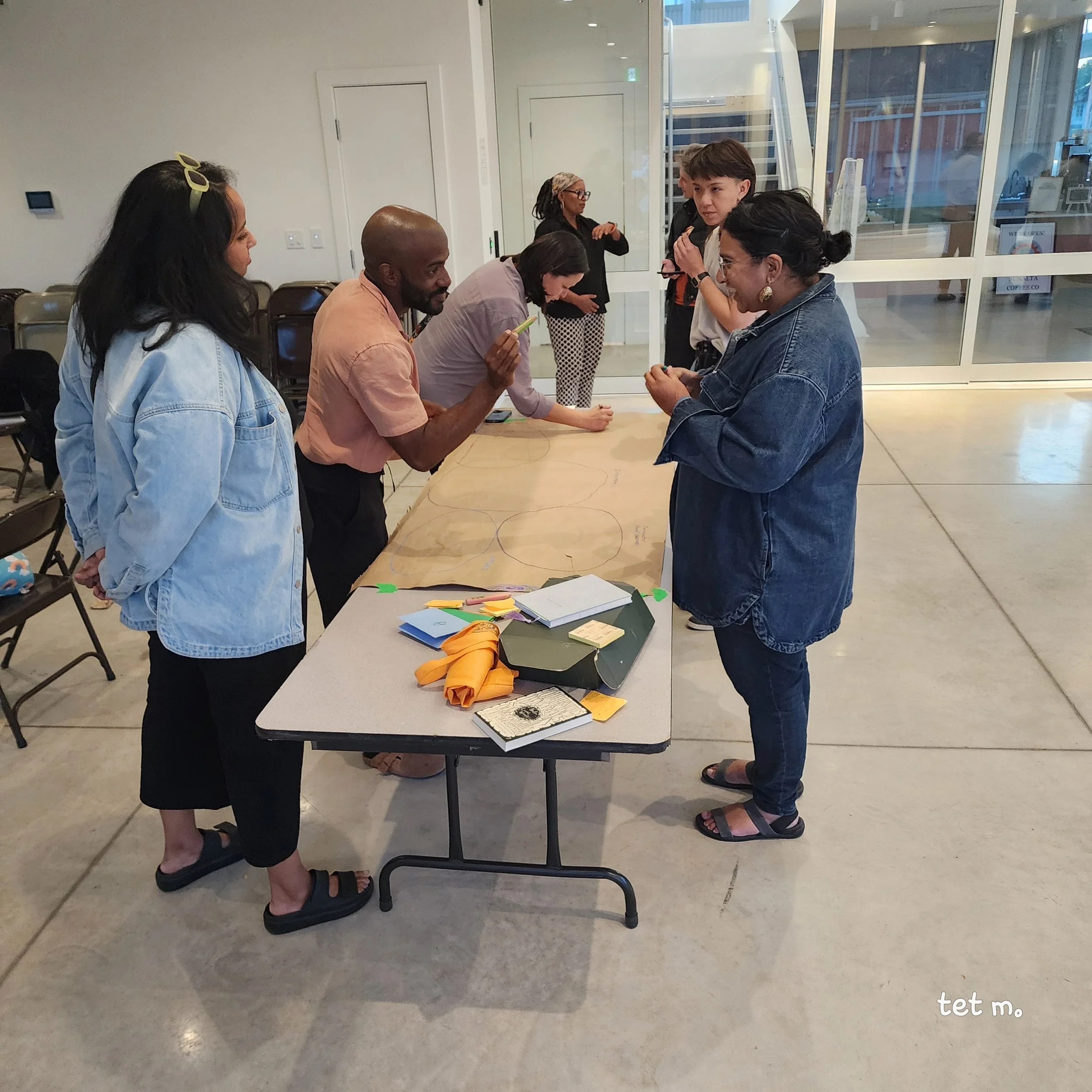
On August 20th at Sunalta Community Association. 10 years of AROC retrospective was held, a community gathering to honour the many community members and their contribution to AROC (Anti-Racist Organizational Change process) over the past 10 yeas. 15 previous members reunited to share a retrospective of the AROC experience. Many folks in the community embedded the AROC process to their work, families and neighbourhoods. We celebrated the experience, the learnings and challenges of embedding the process.
What is AROC?
Anti-Racist Organizational Change (AROC) at CommunityWise started in March 2016. During this time, the staff at Communitywise and board worked through a consultative and emergent process to better understand and define organizational racism as well as develop and implement strategies to create greater racial equity in the nonprofit organization of Communitywise.
While the process of AROC and the goal of creating greater racial equity is a constant and evolving one, we’ve developed some tools and resources that shed light on the process we are undertaking and that may help others do the same.
Note: These resources share some but not all of the challenges CommunityWise has faced, and they don’t necessarily reflect the difficulty we’ve experienced along the way. Anti-racism work is not as simple as applying resources “off the shelf”. It is a long-term commitment that requires a lot of self-reflection and learning. It also invites a great deal of discomfort. But it is only from this discomfort that change can actually occur.
Organizations and AROC
The Onion Tool
After publishing our initial AROC Resource Booklets (below), we heard from many nonprofits who want to start their own anti-racist organizational change process. This fillable tool can support your organization as you begin or continue your work. It guides you through creating a self-assessment. This can prompt deeper conversations about where racism lives in your organization and how to address it. (click image to access full tool)
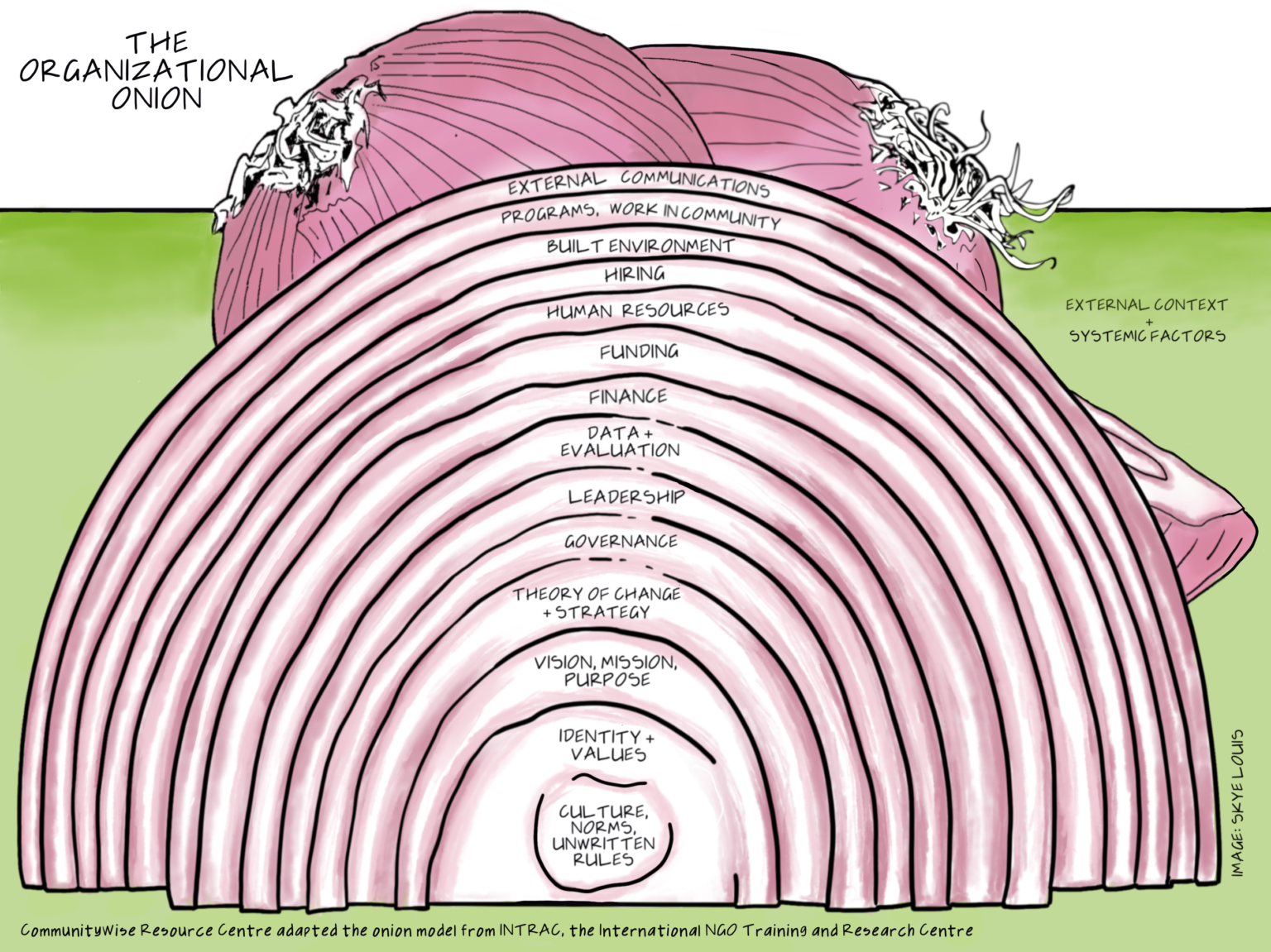
Visual created by Skye Louis
Use this tool to have an honest conversation about how ready your organization might be to start addressing racism within the organization itself. Where are you now? And what would it take to become more Principled? (click image to access full tool)
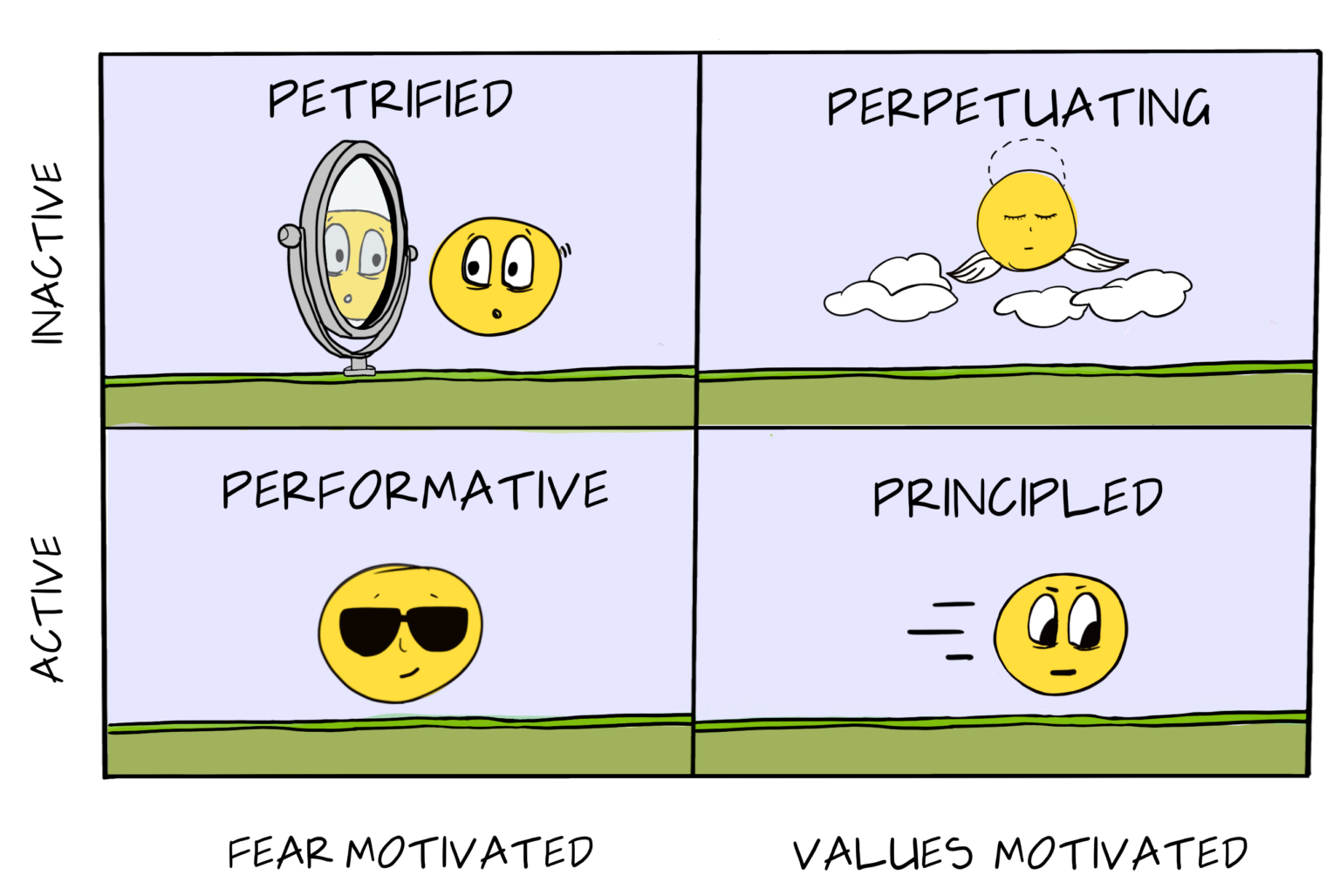
Visual created by Skye Louis
Organizational Racism: Self-Assessment
We developed this short questionnaire—just five questions—to get people thinking about how well their organization is addressing organizational racism. There’s a lot more to it than these questions suggest, so we’ve included links to more comprehensive assessments, as well as definitions of the words diversity, inclusion, equity, organizational racism, and anti-racism. Organizational Racism: Self-Assessment.
Bolade’s Thoughts on the AROC Retrospective!

Bolade’s Thoughts: At the recent AROC 10 Year Retrospective, , we had the chance to bring together people from across time, those with past connections, current connections, and hopefully future ones as well. It was a space to reflect on the journey of AROC, to honour the memories made, and to imagine what the next 10 years could look like.
One of the guiding questions posed was “What does it look like for you? 10 years in the past, in the present, and 10 years in the future?” Each perspective, of course, was unique. For those who have known each other for a decade or more, the conversation naturally wove around shared journeys. “People grew up with AROC. People found AROC when it mattered most.”
These reflections revealed that no matter when people joined the journey, the common thread was the relationships built, and the empowerment found in community. One participant noted that, whether looking back or ahead, “The one thing that’s left is to act and do.”
We also spoke about belonging, about being “people of a place” and “people out of a place.” What surfaced in that conversation was the idea that what really matters is people power, being empowered through the connections we make and the relationships we build. A relationship formed at a particular moment in time has the power to carry forward for 10 years, 20 years, and beyond.
“We don’t know what the future holds” was a common reflection, what was just as clear was the grounding that comes from looking back. The memories and experiences of AROC continue to shape people. Looking back helps us understand who we’ve become; looking ahead inspires us to keep building.
Accountability to Indigenous Communities Project
Since early 2019, AROC has worked with an Indigenous Advisory Group, led by Blackfoot elder Jackie Bromley, to learn about and address anti-Indigenous racism as part of our AROC process. The members of this group, as well as Nicole Eshkakogan, the consultant that supported us in forming and working with the group, sat down with Michelle Robinson of Native Calgarian in October 2020 to discuss the work they did with CommunityWise. We are grateful for their contributions and look forward to deepening our relationships with them as we take action on their recommendations for Indigenous-led solutions for equity and anti-racism. View a summary of the “final report” mentioned in the podcast here.
Native Calgarian
Sovereign Spirits
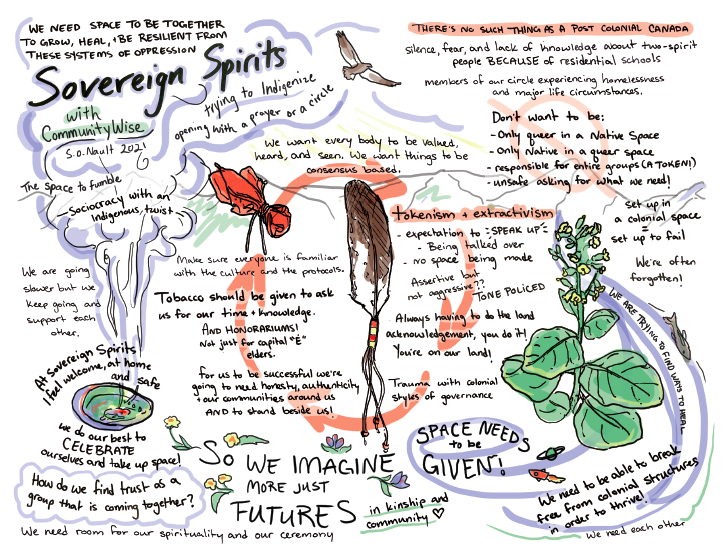
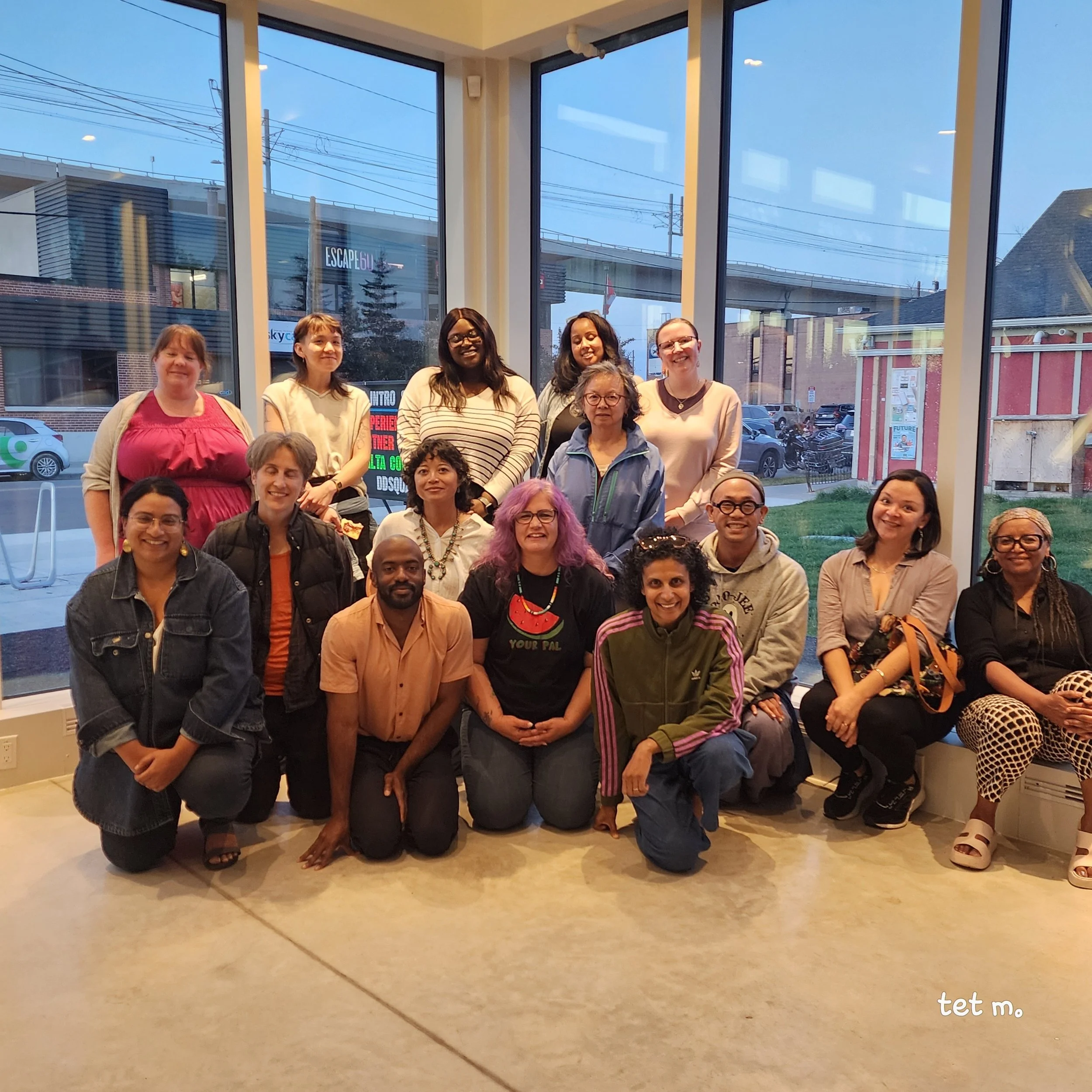
AROC gathering
AROC Tools and Resources for Organizations
In our first resource booklet, we share ideas, group activities, sample documents, frameworks, policy tools and other resources we have both used and developed in the first phase of AROC at CommunityWise.
AROC: Resources and Tools for Nonprofits (print version)
AROC: Resources and Tools for Nonprofits (web version)
AROC: Resources and Tools for Nonprofits Appendix (print version)
AROC: Resources and Tools for Nonprofits Appendix (web version)
Deeper AROC: More Tools & Resources
Our second resource booklet is a companion to the first and shares tools and resources from our second phase of AROC, including our emerging Theory of Change, stories that surfaced through evaluation, and the several ways we deepened our practice of anti-racism.
Deeper AROC: More Tools & Resources (print version)
Deeper AROC: More Tools & Resources (web version)
The second resource booklet and webinar (below) was developed in partnership with the Alberta Association of Immigrant Serving Agencies (AAISA).
Introduction to AROC Webinar
We developed a webinar to support the understanding and use of the content found in the first and second resource booklets.
In November 2020, jaqs gallos aquines and Thulasy Lettner presented about AROC as part of Board Leadership Calgary’s online learning series.
Ways AROC Changed Our Relationships, Retrospective
How has AROC informed your life, the way you work, challenges, what has it meant for you to remain principled? How do you exist now related to some of these different places in your life. As an individual, community/relations, system, your labour, nature?
When it comes to your labour how did it change your approach to labour?
Normalize care as an outcome of work
I examine leadership and positionality when I’m at work
Feeling bad in shitty jobs is a workplace issue not a personal one
Financial self-worth and understanding
Impact on your personhood
Boundaries
Many feelings can be true at once
The words
Multi-faceted Indigeneity exists
Principled
Understand yourself first
Empowerment
Intersectional identities - permission to be our wholeselves
How you understand and look at systems?
Accountability to Indigenous Communities
Haunt the systems with our values
Share document AROC
Understanding my role and scope in systems change
AROC changed by relationship to nature?
All of us are interconnected
Respect nature
Equal to land not communion over it
Treaty partners
The lad teaches me to feel justice
The land feels the genocidal happenings and she talk with me about it
How did AROC Influence My relationships
Keep talking about anti-racism (If you have energy)
My kiddo is developing an understanding of intersecting identities
You are not alone and you don’t need to be alone
A sesire to return to each other
Chosen family
Conversation that allows us to be in community, we don’t need permission, we deserve community
There is no separation. It can’t be seen
Desire to return to each other (disconnect from the individual)
Kapwa - I relate therefore I am