
Listening, Storytelling, and the Work of Change: Centering Anti-Racism and Decolonization with Dr. Shumaila

In Calgary, on Treaty 7 territory, conversations around anti-racism and decolonization continue to evolve, shaped by lived experiences, community spaces, and the stories people choose to share. For Dr. Shumaila, a Calgary-based writer, musician, and community arts practitioner, these conversations must begin with listening to the land and to how it asks us to be present in relations of care and responsibility.
Through her work as the founder of The Deep Listening Path, Dr. Shumaila brings together storytelling, music, and community practice to explore how people can better understand harm, resilience, and belonging. Her approach challenges us to move beyond surface-level engagement and toward something deeper: a willingness to sit with stories that may unsettle dominant narratives and systems of knowledge. She is also a PEN Canada Writer in Exile, a recognition of her work at the intersection of storytelling, displacement, and freedom of expression.
Locating Anti-Racism Within Lived Experience
For Dr. Shumaila, acknowledging Treaty 7 territory is not symbolic, it is a recognition of ongoing colonial structures that continue to shape everyday life.
Her own experience of long-term immigration precarity—spanning 17 years in Canada—reveals how exclusion is not incidental but systemically produced, even within institutions that present themselves as inclusive. Her work reframes these experiences not as individual hardship, but as part of a broader structural condition that exposes the limits of dominant anti-racism frameworks.
For example, she asks: “Would it not be more ethical to seek permission from the elders of the nations who have long stewarded these lands we call Alberta, rather than waiting for IRCC to process my application while my dignity and belonging remain in suspension?”
By foregrounding lived experience as a site of knowledge, she expands anti-racism and decolonization beyond policy language, insisting that they be grounded in material realities, instability, and unequal access to belonging.
Her work reframes belonging not as a question of access or inclusion, but as a form of ethical custodianship grounded in responsibility, relation, and care.
The Role of Listening in Anti-Racism Work
At the centre of Dr Shumaila’s practice is deep listening, a practice that can help newcomers and non-Indigenous communities to listen deeply to the land and be more accountable for their presence.
She describes listening as a practice that one cultivates. It is also an ethical stance towards the histories of the people so that stories are held with care rather than dismissed altogether. In many spaces that claim to prioritize equity and inclusion, she has experienced what happens when listening is absent: silence, disconnection, and the marginalization of lived experience, or when listening is shaped by external agendas, such as organizational funding priorities.
Deep listening, in this sense, is not supplementary to anti-racism work, it is foundational. It requires a willingness to confront discomfort, to remain with contradiction, and to shift how knowledge and the people who carry it are valued and understood.
It requires communities to move beyond performative commitments and to truly engage with the voices of those who have been historically excluded.
Without this kind of listening, conversations around anti-racism risk becoming superficial, detached from lived realities and structural harm.
Storytelling as a Pathway to Understanding
For Dr. Shumaila, storytelling is a political act—one that makes complex, often invisible experiences visible and impossible to ignore.
Through her memoir Writing in the Wound: Acculturation, Trauma, and Music, featured in Alberta’s 2025 Favorite Reads, she articulates forms of precarity and displacement that are often rendered invisible within policy and public discourse.
Storytelling, for Dr. Hemani, has been a way of reclaiming political voice and belonging despite 17 years of ongoing precarity.
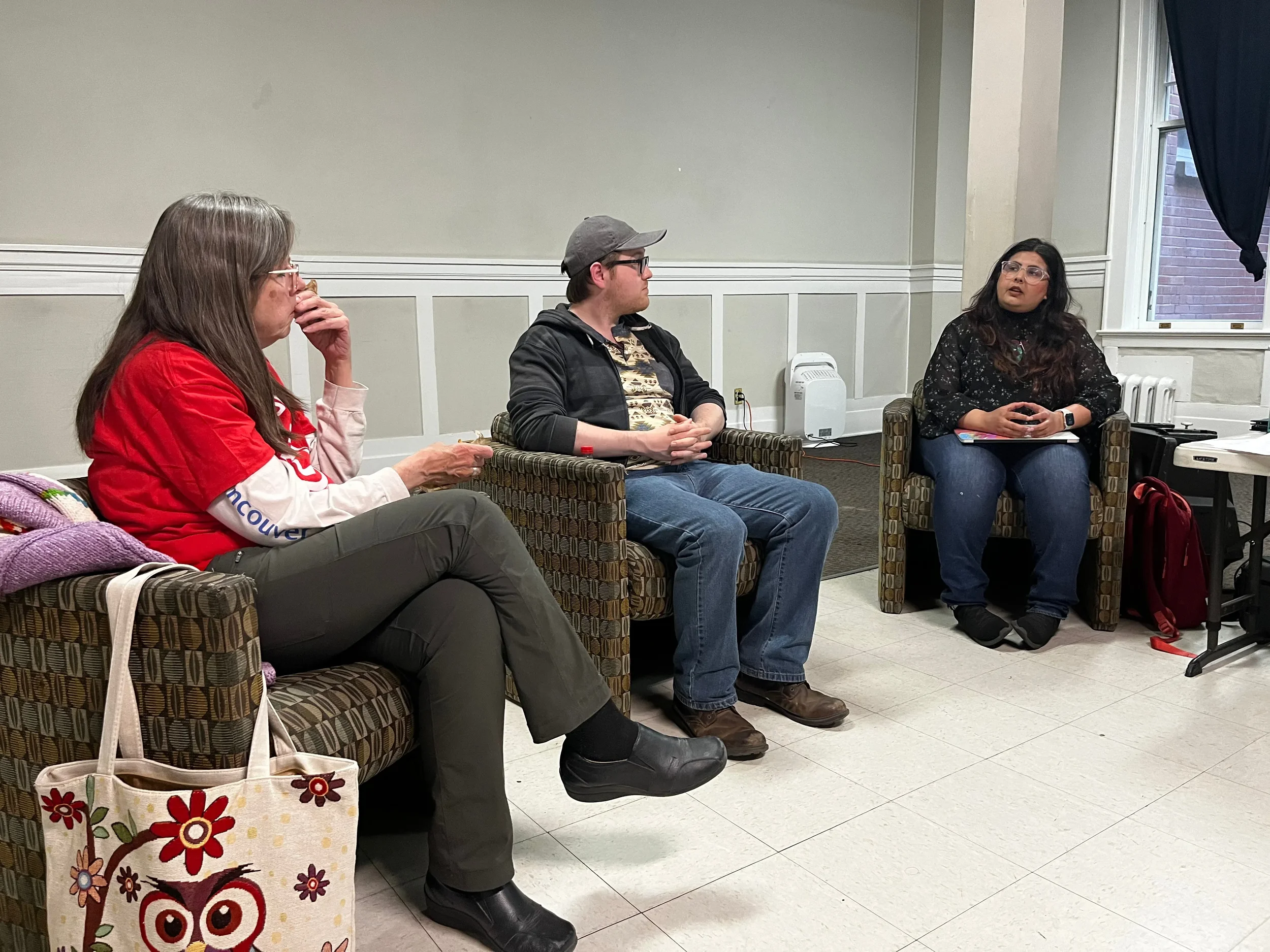
When shared in community spaces, such as Action Dignity’s Echoes of Equity, these narratives did more than resonate, they reconfigured how immigration precarity is understood, opening space for collective recognition and critique.
That clarity, she explains, made it possible to bring her story into public discourse through an essay in Canadian Dimension and a forthcoming short story with the International Human Rights Press, which bring her experiences into public discussion.
Storytelling, in this context, becomes a way of holding systems accountable for forms of harm often obscured as routine procedures, while also reclaiming voice in the face of silencing and the ongoing trauma of erasure.
Bridging Gaps in Current Conversations
Dr. Shumaila also identifies structural gaps within current anti-racism and decolonization efforts. She notes that many spaces leading these conversations are shaped by particular forms of privilege, where issues like affordability and accessibility are not always centred. Yet for many marginalized communities, these challenges are inseparable from experiences of racism.
Through her work, particularly her deep listening circles, she brings these conversations together.
By connecting anti-racism, decolonization, affordability, and accessibility, she brings a more systemic approach to social change. One that reflects the realities people are living, how these tie with systemic barriers, and what policy shifts are necessary.
Community Spaces as Sites of Change
Community-centered spaces play a crucial role in making this work possible.
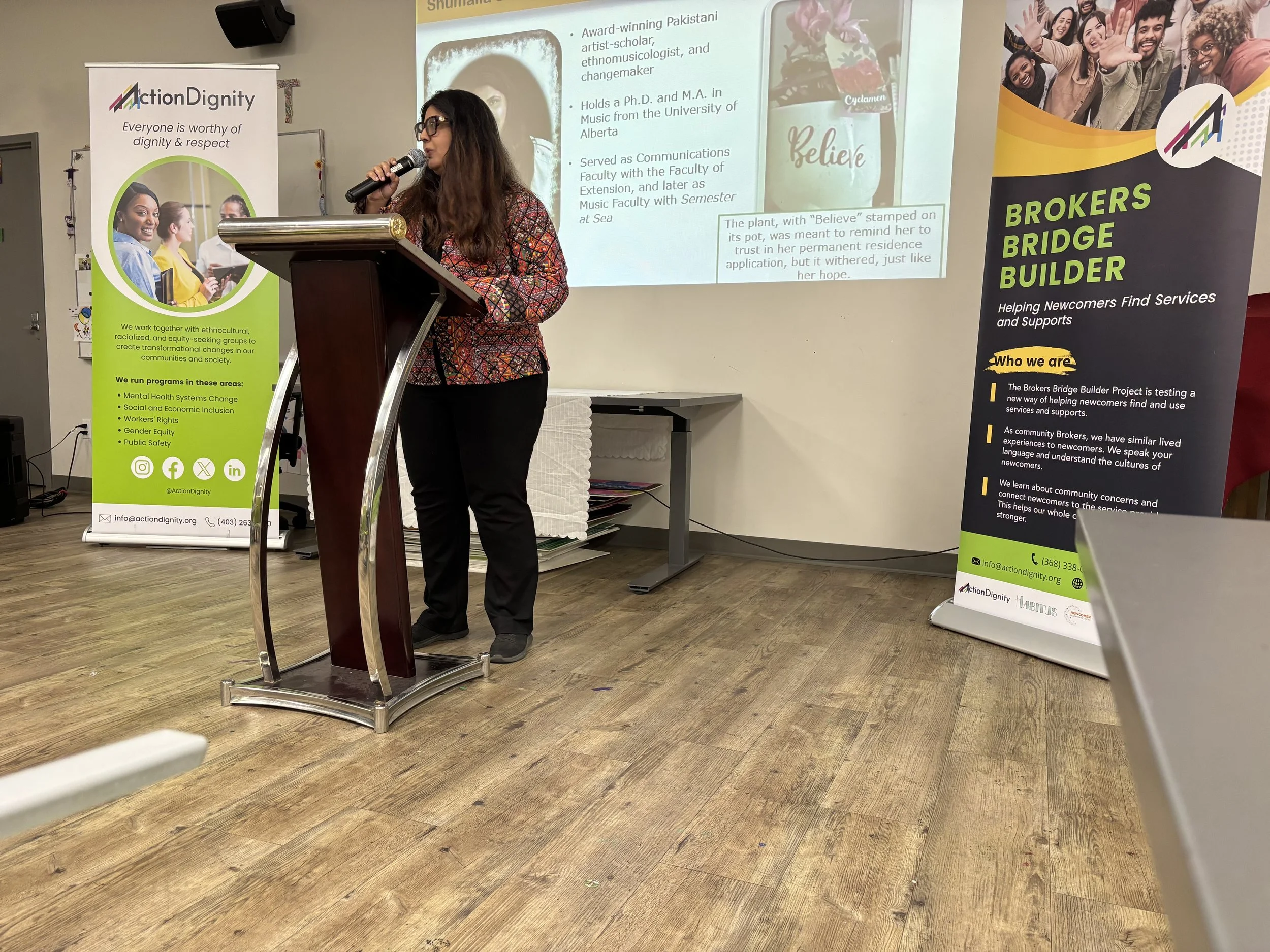
Dr. Shumaila emphasizes that these spaces are more than physical locations, they are places where relationships are built and stories are shared. They allow for sustained engagement with difficult conversations, something that is essential for meaningful change.
However, she also points out that these spaces are increasingly under threat.
As community hubs are displaced or lost, so too are the opportunities for connection and dialogue. Protecting these spaces, and ensuring they remain accessible and inclusive, is a key part of advancing anti-racism and decolonization work.
Moving Beyond Frameworks
For emerging artists, writers, and community practitioners, Dr. Shumaila offers an important reminder: anti-racism and decolonization cannot be reduced to frameworks alone. She encourages people to move beyond textbook understandings and to engage directly with lived experiences. This means paying attention to how systemic harm shows up in everyday life, especially at times when systems are increasingly failing. It also involves being willing to question one’s own role in perpetuating privileged and ableist frames of thinking.
Allyship, she explains, requires more than intention. It requires taking the time to understand context, to show up consistently, and to speak out when it matters, especially when marginalized voices are being misrepresented or silenced.
A Practice Rooted in Listening
Looking ahead, Dr. Shumaila continues to build on this work through The Deep Listening Path, focusing on creative resilience, immigrant mental health, and artist burnout. Through workshops, courses, and community-based initiatives, including upcoming creative nonfiction courses with the Alexandra Writers’ Centre. She creates spaces where storytelling and listening function not only as tools for expression, but as methods for confronting harm, rethinking how knowledge is produced, and imagining more just and ethical futures for our communities.
She also has upcoming publications in Westword Magazine and Wise Brain Bulletin, where she explores the process of deep listening in greater depth, as well as a short story forthcoming with IHRAM Press.