
Young In Kim, Korean Social Services Centre (KSSC) - Storytelling for Change
“Let’s live well together.”
Young In Kim, founder of the Korean Social Services Centre (KSSC), goals were to build connection, create safety, and amplify community voices across Calgary.
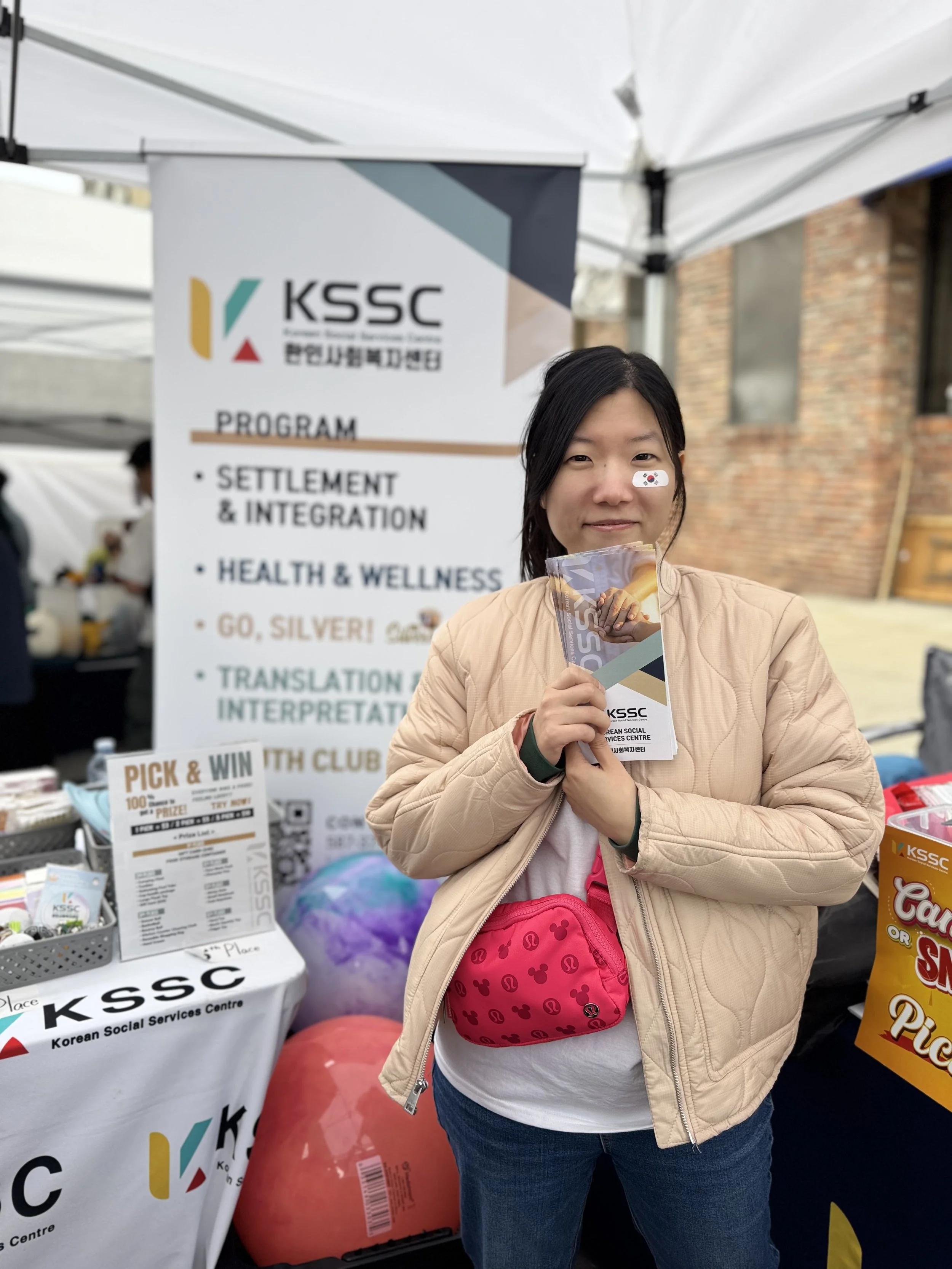
As a Korean immigrant herself, Young In experienced firsthand the isolation and barriers faced by unfamiliar systems, and a lack of culturally relevant support. “It felt like the Korean community was on the outside looking in,” she said. “People didn’t feel like they belonged or had a chance to participate fully in society.”
Her work began with grassroots activism and anti-racism organizing, often as the only Korean person in the room. The turning point came during the COVID-19 pandemic, amid a rise in anti-Asian hate. After participating in a peaceful protest, Young In realized something, many in her community didn’t feel safe enough to show up. “People were scared. They didn’t think they had allies,” she further shared that it is more that community members may not have been familiar with discussions on racism or even educated on forms of racism.
KSSC began as a way to bring Korean voices together but quickly grew into something bigger. “We already live in such a hard time as individuals. Why not come together to support each other?” she asked. “KSSC isn’t just for Koreans. It’s a space for anyone who wants to learn, connect, and heal.”
A Safe Space Rooted in Equity and Belonging
At its core, KSSC is guided by these values: Equality, equity, and respect, Accessible learning, Non-discriminatory and non-judgemental approaches, Confidentiality, Anti-racism, human rights, and social justice, and Diversity and inclusion. The organization offers a variety of support including guidance on social welfare support in Canada, mental health resources, senior/youth programs, and cultural support for Koreans and others who would like to learn about Korean culture.
“There’s no judgment here,” Young In emphasized. “We want people to feel comfortable no matter who they are. Everyone deserves access to information, to community, to care.”
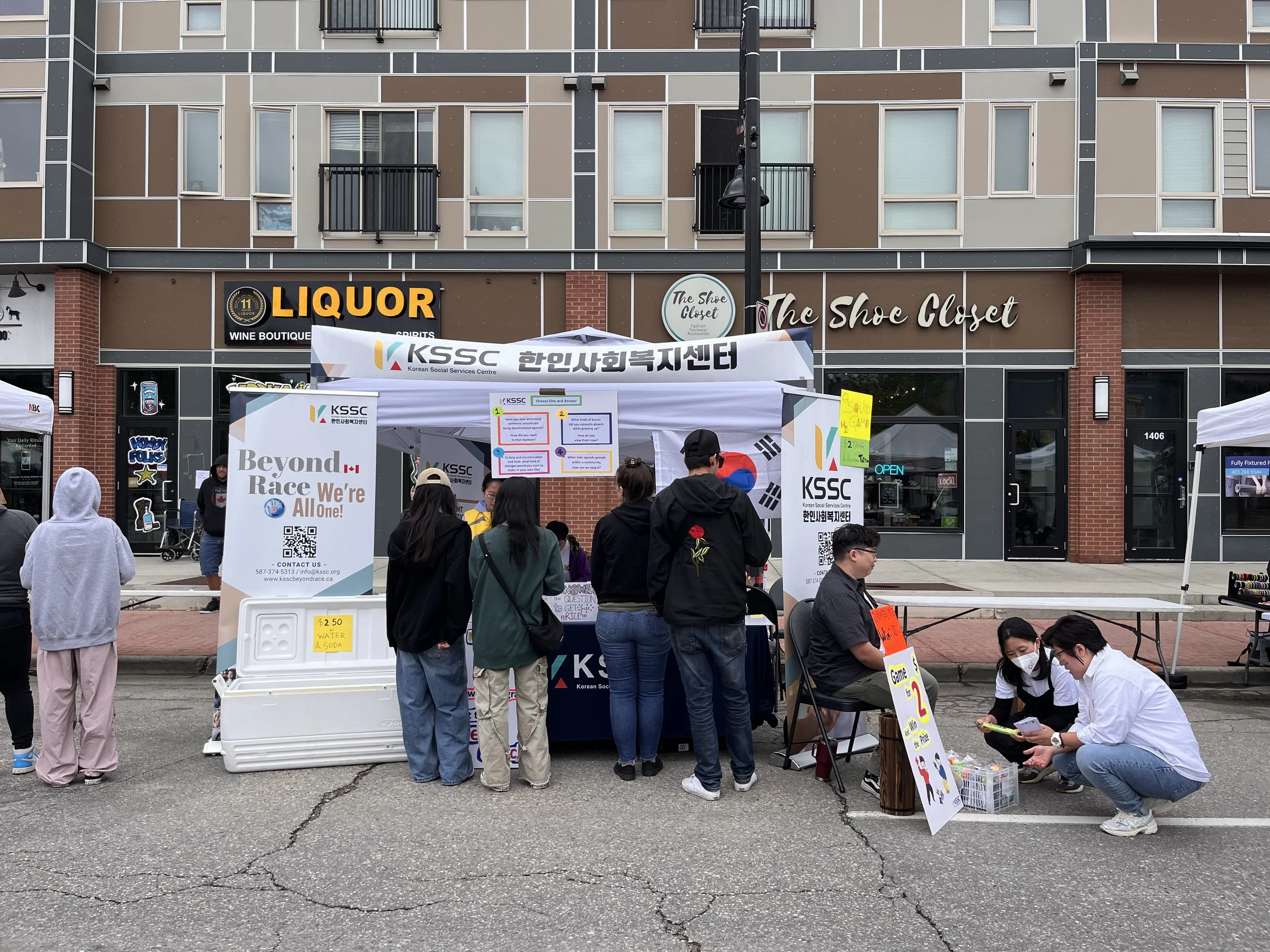
KSSC also plays an active role in anti-racism education, hosting an annual event called Beyond Race: We Are All One! The gathering invites people from all backgrounds to share stories, performances, and reflections on identity, healing, and resistance. “It’s not about pointing fingers. It’s about expanding understanding and an appreciation of diverse perspectives derived from multicultural society,” Young In said.
Anti-Racism and Decolonization in Practice
KSSC’s approach to anti-racism and decolonization is both personal and collective. They partner with racialized and Indigenous communities across Calgary to co-host community circles, collaborate on initiatives, and create public art rooted in resistance and are continuously looking for opportunities to build stronger structure and expand to hear interests from more communities to join
One project KSSC is working on is a citywide collaboration with SandArt Calgary, inviting community members to express their anti-racist and decolonial visions through public artwork. “We want people to see that their voices matter,” Young In said. “That their experiences and stories deserve space.”
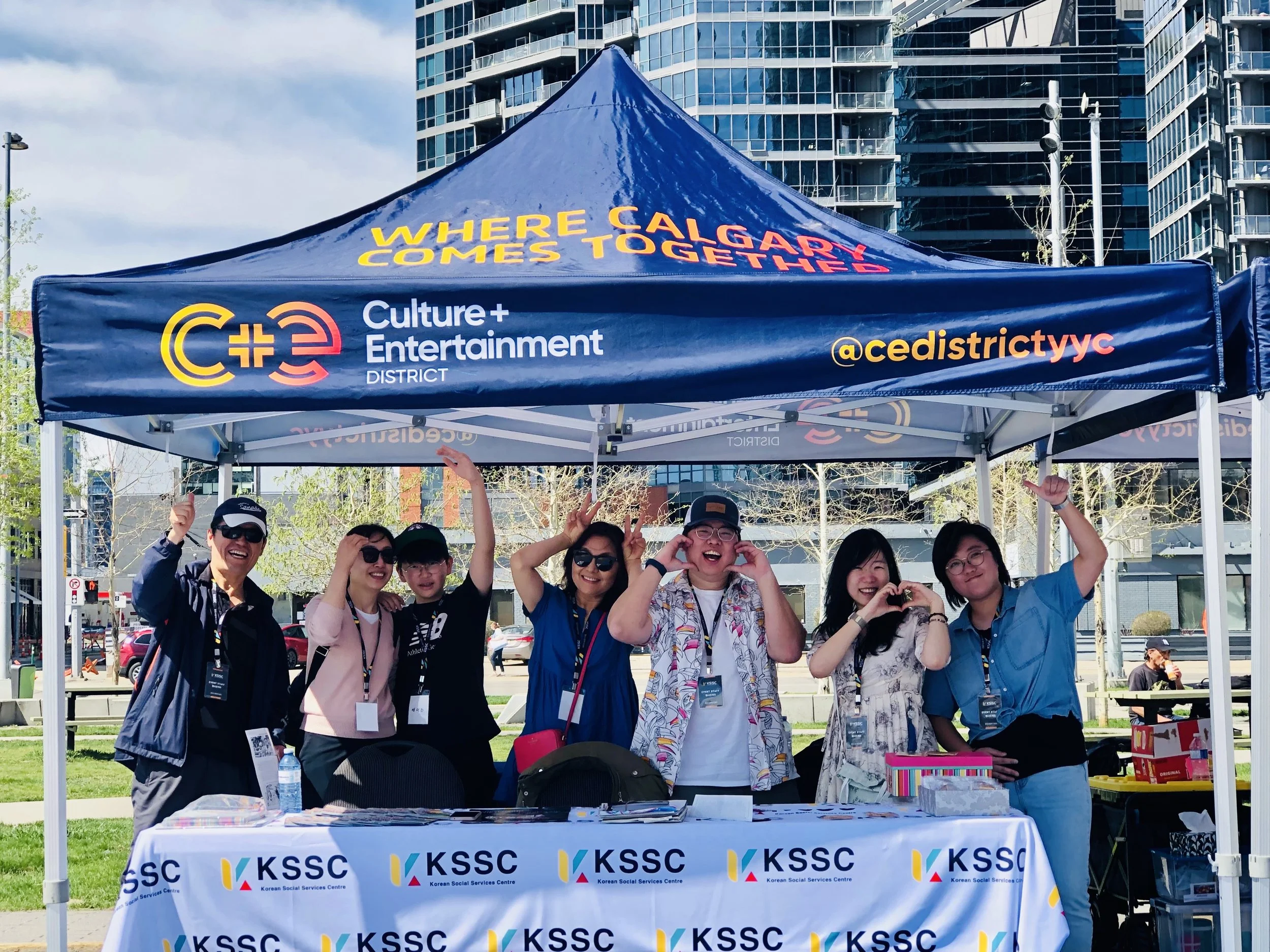
For her, the work starts from within. “I’m constantly learning and unlearning,” she reflected. “Teaching people about microaggressions, encouraging self-reflection and it’s all part of a larger journey. Anti-racism is not a destination. It’s a daily practice.”
Looking Ahead
In the next five years, Young In hopes to see KSSC grow into a full-fledged community hub, a “third space” where people from all backgrounds can connect, create, and care for one another. “We want to offer more programs rooted in our values, deepen our collaborations, and become a bridge between communities,” she said.
But more than anything, Young In wants KSSC to be a model of what’s possible when we choose compassion over division.
“We are all human. Let’s create a society that’s safe for everyone. Let’s build an equitable future, together.”
Written by: Bolade Afolabi