
Growing Connection: An Interview with a Climate Hub Community Connector
What happens when Climate Action shifts from urgency and burnout to connection, care, and community? We spoke with Sophie Burns, the Calgary Climate Hub Community Connector with the Building Connected Communities Project, to explore how relationship-building, storytelling, and intergenerational exchange are re-shaping what climate advocacy can look like.
THE CONVERSATION
Q: The Calgary Climate Hub is deeply rooted in advocacy. Why is a Community Connector role important in that context?
A: That is such a good question and one that I have been reflecting on a lot. Advocacy around climate change often starts from a place of fear or urgency. It asks people to act quickly; sign petitions, show up, push for change. And that is very important, but it can also lead to burnout. It is not always sustainable.
So, one of the reasons why I think it is helpful for the hub to have a connector is not to stop doing the advocacy work that the team does so well already, but to also put our focus on community building that is nourishing and bringing people together in joyful ways. It is about creating spaces where people come together not just to fight against something, but to celebrate what is already here: the land, the people, beauty, the efforts already underway.
I have been really drawn to the idea of Asset-based Community Development (ABCD) in this space - focusing on what’s strong, not what’s wrong. There is so much happening already: community gardens, nature-based solutions, local groups, and creative initiatives. When we highlight and connect those assets, we build energy that can sustain long-term engagement.
It shifts the question from “How do we fix everything?” to “What can we grow together?” The most important thing is to start with deep listening.
Q: How did you begin shaping your role when you first stepped into it?
A: I was lucky to have two starting points: an existing Eco Elders group and a broad focus on climate justice, as well of course as the great support of Talynn and Jared, the Program Manager and Executive Director. That gave some structure, but even then, the first couple of months were really about listening.
I met people, learned the history of the groups, attended events, and tried to understand what mattered most to community members. With the Eco Elders, I joined things that were already happening, like a film screening, and got to know their rhythms and priorities.
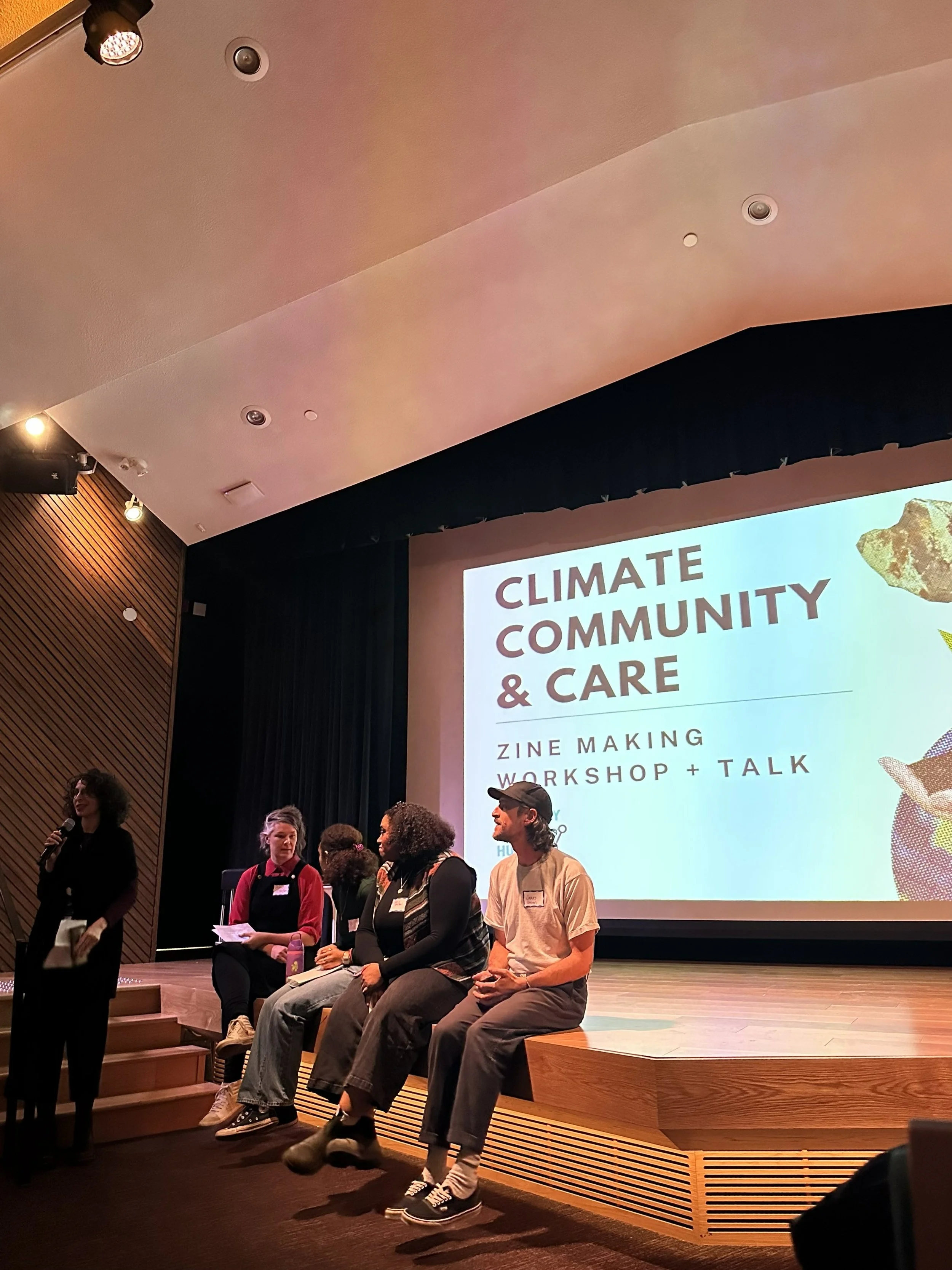
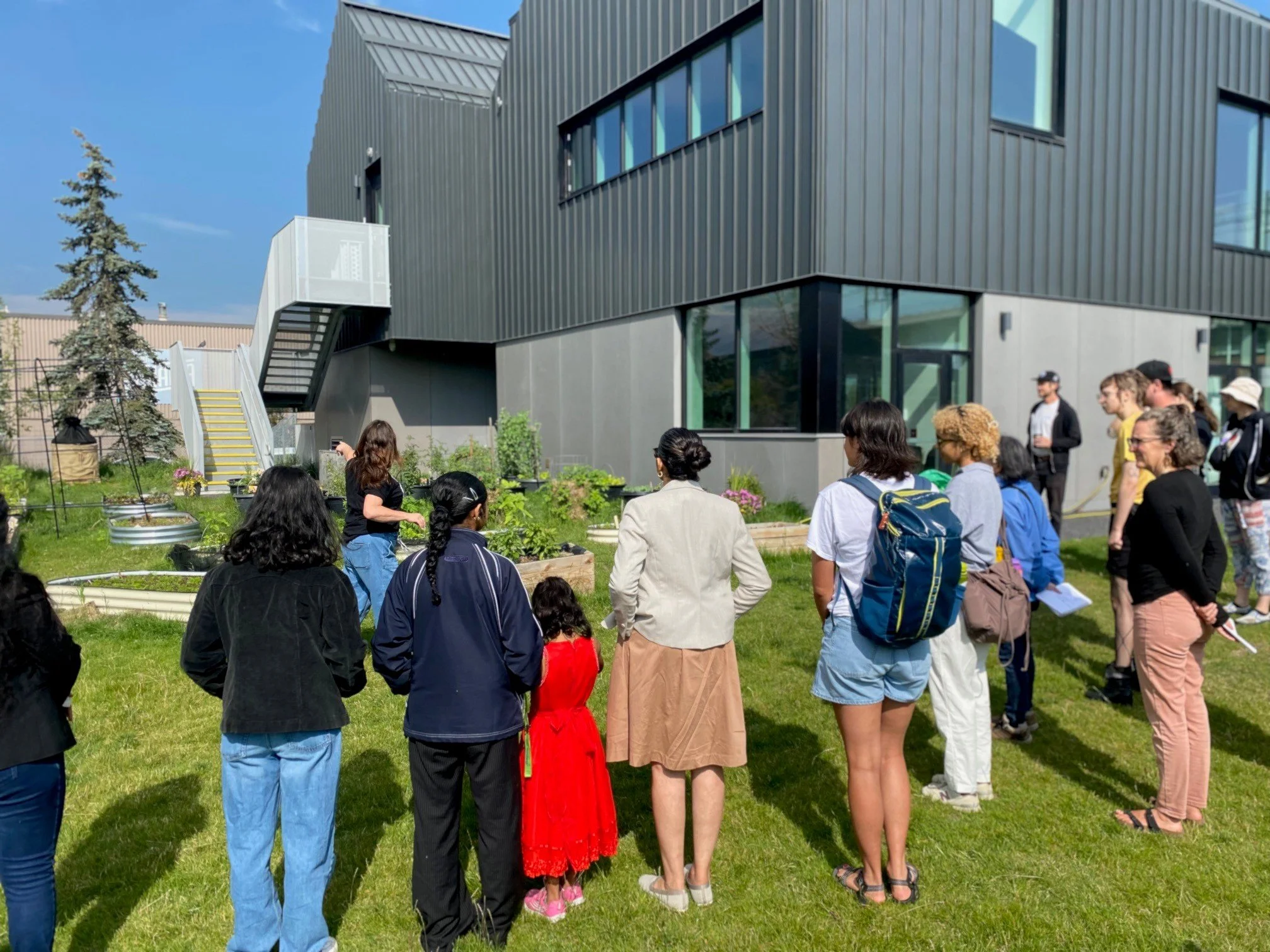
The climate justice space felt much more broad. Climate justice intersects with every aspect of life; housing, cost of living, transportation, etc. So I started by hosting gatherings like a land-based walk and talk, a film screening, a zine making workshop, and simply invited people who cared about climate justice to come together to be creative and have fun. I didn’t know who would show up.
What emerged surprised and delighted me: a vibrant, engaged group of mostly young people who wanted to take positive action and build community together.
Very quickly into my Connector role, I found myself working with two distinct groups; seniors and youth. And right away, it felt like there was something powerful in that- a place where generations meet!
Q: What does intergenerational connection look like in practice?
A: It has been one of the most exciting parts of the work.
On a practical level, young people can help seniors with things like technology, joining webinars, navigating social media, making posters; all the small but important tools that keep people connected and engaged… but it goes much deeper than that.
The Climate Justice Collective started hosting intergenerational climate cafés. They facilitate conversations, create prompts, and hold space for open dialogue. I support them with logistics where needed, but they really lead it.
At one café, I sat with a woman in her 70s who shared stories of growing up on a farm with seven children, one bath a week, re-using water and living simply. It sparked such a meaningful conversation about what “transition” means across generations.
These spaces allow for story-sharing that doesn’t often happen otherwise. Many of the older adults in the Eco Elders group are long-time activists and bring decades of lived experience in activism. Young people bring new perspectives on equity, Indigenous rights, inclusion for 2SLGBTQIA+ folks, and more. There is learning in both directions.
It is not just about exchanging ideas, it is about building understanding, empathy, and relationships through time and space.
Q: Have you seen a shift in how people engage over time?
A: Definitely! one of the most meaningful shifts has been toward connection as a foundation for action.
With the Climate Justice Collective, we intentionally modeled gatherings that begin with connection: land acknowledgments, reflective questions, a space for people to share. Over time, they adopted that approach themselves.
Now, their meetings include not just planning and action, but a space for real conversations and connections. Recently, after going through their agenda, someone opened a discussion about their concerns around AI and how to use it ethically in climate work. It turned into a deeply thoughtful conversation. It was not planned. It just happened because the space felt safe.
That moment really stood out to me. It showed that the group had moved beyond just organizing, they are becoming a community. A place where people can bring questions, uncertainties, and even fears, and be met with care and thoughtful, curious dialogue, not judgement.
That is what sustains and nourishes people and creates thriving communities. That is what prevents burnout or heartache.
Q: What inspires your approach to intergenerational connection?
A: I have been inspired by examples in places like Sweden, where students who need affordable housing are paired with seniors who have extra space and are looking for companionship. It is a simple, practical approach that meets real needs on both sides.
There aren’t as many initiatives like that here in Calgary, but it points to something relevant in our work; the value of creating opportunities for different generations to connect in meaningful ways. When that space exists, people naturally share skills, experiences, and perspectives.
In our context, that looked like small, consistent opportunities to come together: conversations, gatherings, and collaborative projects. Over time, those interactions build familiarity and trust.
It is about creating spaces where people can contribute in ways that feel meaningful to them, and where they feel part of something, not just responding to an issue, but staying connected to others while doing so. Where they don’t just fight for the future but build connections in the present that make that future beautiful.
And in practice, that connection and love between people, to place, and to what they care about can help sustain involvement over the longer term and build reciprocal networks of care.
Thank you for sharing such a beautiful and inspiring story on building a connected community through climate justice.
A: Thank you for having me! And if you want to hear more about the work we are currently doing then join us for the Tree Party Event on May 30th from 10am to 2:30pm at the Central Library.